
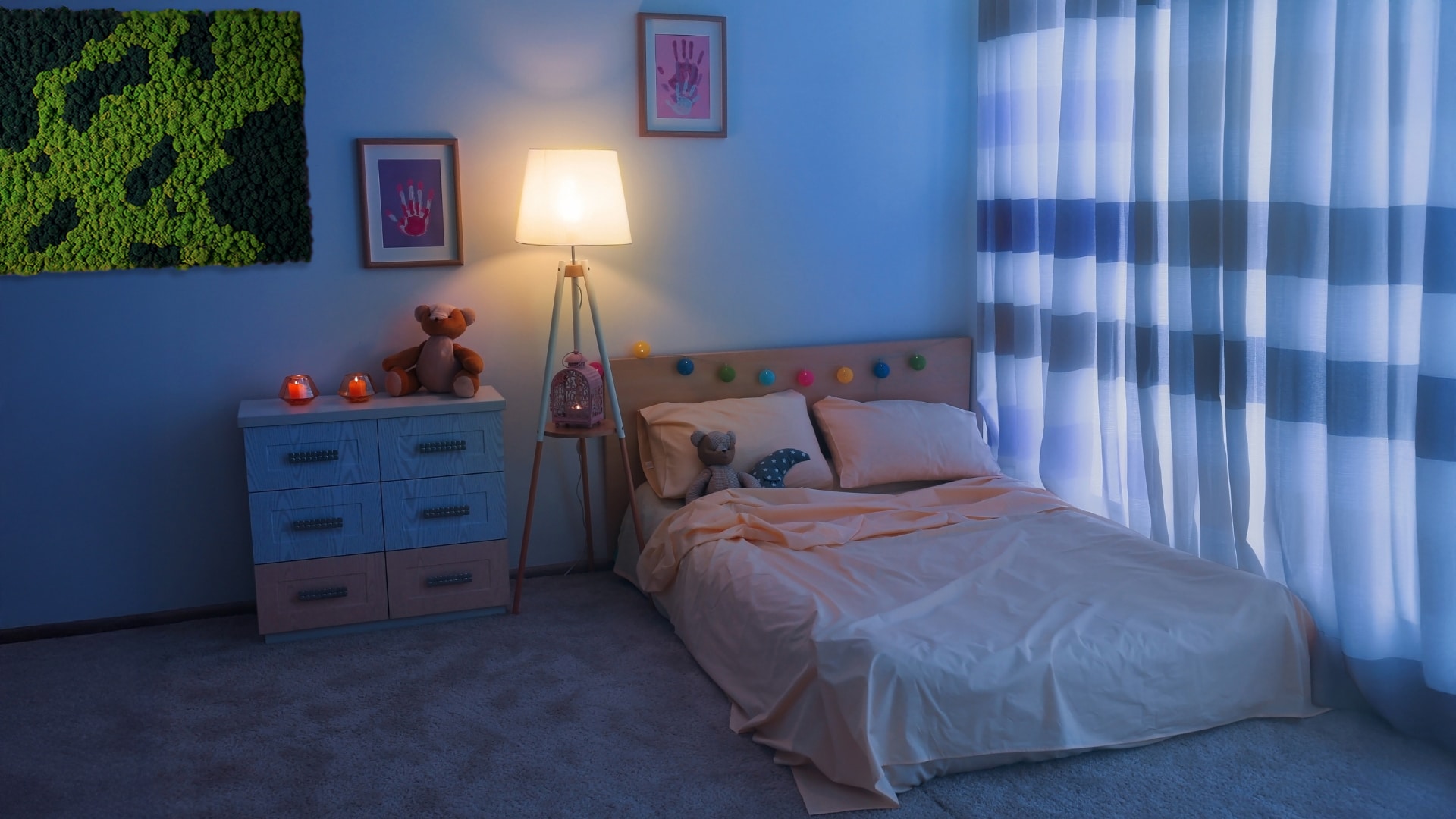
Stabilized moss is a natural decoration that has become a popular interior design element in 2025. At Vikingmoss, a company specializing in decorative stabilized plants, we often receive questions from parents about the safety of moss for children. Stabilized moss, subjected to a special preservation process, preserves its natural appearance while eliminating the potential hazards associated with live plants.
In this article, we'll explore the safety of stabilized moss for children, drawing on our extensive industry experience and scientific research. We'll analyze both the benefits and potential risks to help parents make an informed decision about introducing this natural decoration into their children's spaces.
Safety of stabilized moss – what is worth knowing?
Stabilized moss, unlike live moss, undergoes a special preservation process that significantly enhances its properties. This process involves replacing the natural plant sap with a mixture based on glycerin and food coloring, ensuring the moss remains soft and flexible for a long time while maintaining its natural appearance.
Our experience shows that the main advantage of stabilized moss in terms of child safety is the absence of the use of pesticides or fungicides, which are often used with live plants. Free of biologically active substances, stabilized moss does not attract insects or grow mold, eliminating potential allergen-related risks.
It is worth remembering, however, that despite the safety of the product itself, as with any decoration, adult supervision is recommended, especially when there are small children in the house who may try to touch or put the decoration elements in their mouths.
Potential allergies and stabilized moss
One of the most common questions parents ask us is about potential allergies related to moss. Stabilized moss is usually safe for children with allergies because the stabilization process eliminates most of the allergens naturally found in living moss. During stabilization, the moss is thoroughly cleaned and then soaked in a preservative solution, which halts biological processes and eliminates potential allergens.
Stabilized plants , including moss, cause significantly fewer allergic reactions compared to their live counterparts. The table below compares the allergic potential of different types of plant decorations :
| Type of decoration | Allergic potential | Pollen emission | Care required |
|---|---|---|---|
| Live plants | Tall | Yes | High |
| Dried plants | Mediocre | Yes (limited) | Low |
| Stabilized moss | Short | NO | Minimum |
| Artificial plants | Very low | NO | Lack |
We rarely observe any reactions to stabilized moss among our clients with children suffering from allergies. However, it's worth noting that every body is different, and for children with particularly sensitive immune systems, we recommend conducting an exposure test before introducing larger moss compositions into their living space.
Can children touch stabilized moss?
Many parents wonder whether to allow children to come into direct contact with stabilized moss. Touching stabilized moss is generally safe for children, as the material does not contain any toxic substances that could be absorbed through the skin. Once stabilized, the moss becomes soft and pleasant to the touch, which often attracts the attention of young children.
Our experience shows that contact with natural, yet stabilized, materials can have a positive impact on children's sensory development. The varied textures of moss—from soft pillow moss to the more structured reindeer moss —provide engaging tactile experiences.
However, it's important to remember that stabilized moss is primarily a decoration, not a toy. For young children who are beginning to put objects in their mouths, we recommend keeping the moss arrangements out of their reach.
Safety when consumed
Although stabilized moss is not intended for consumption, parents of young children often ask about the potential consequences of accidentally swallowing a small fragment. If a small amount of stabilized moss is accidentally ingested, the risk of serious health consequences is minimal, as stabilization is primarily based on glycerin and food coloring.
However, this does not change the fact that stabilized moss is not a dining product and it should be prevented . In the case of larger children who already understand the basic safety rules, it is worth explaining to them that moss is a decorative element that should not be touched without need or, even more so .
Stabilized moss in a children's room – what to pay attention to?
Introducing stabilized moss into a child's room can be a great way to add a natural element to the interior while avoiding the hassle of caring for live plants. At Vikingmoss we've noticed a growing trend of using our products in children's room designs, especially in the form of moss prints and small arrangements in acrylic containers.
When planning to place stabilized moss in a children's room, it is worth considering several important factors that will ensure both the safety and durability of the decoration.
Optimal placement of stabilized moss
Choosing the right location for your moss arrangement is crucial both for children's safety and for maintaining the aesthetic appeal of the decoration. The best places to place stabilized moss in a child's room are on walls out of reach of small children or in closed display cases, which minimizes the risk of accidental damage while ensuring its visibility.
Our experience shows that moss art placed on walls at a height of more than 1.2 meters is optimal for rooms of children under 6. For older children, consider lower placement once they understand that decorations should not be touched unnecessarily.
Below are the recommended placements for moss compositions depending on the child's age:
| Child's age | Recommended placement | Recommended type of composition |
|---|---|---|
| 0-3 years | High shelves, walls over 1.5 m | Closed terrariums, paintings |
| 4-6 years old | Walls above 1.2m, shelves out of reach | Pictures, small compositions in closed containers |
| 7-12 years old | Any height with appropriate education | All types of compositions |
| 13+ years | No limits | No limits |
Stabilized moss and air quality in a children's room
Parents often ask whether stabilized moss, like live plants, can positively impact indoor air quality. It's important to be specific: stabilized moss, unlike live plants, doesn't actively exchange gases and doesn't purify the air. However, it is completely neutral and doesn't release any harmful substances into the environment.
Research conducted in 2024 by the Institute for Indoor Air Quality found that stabilized plants, including moss, do not emit volatile organic compounds (VOCs), which can be present in some artificial decorations. This is particularly important in children's rooms, where air quality is crucial for health.
It's also worth noting that stabilized moss doesn't accumulate dust as much as artificial plastic plants, which can be an added advantage for children with allergies or asthma.
The educational value of stabilized moss
Beyond its safety and aesthetic benefits, stabilized moss can also serve an educational purpose. Stabilized moss compositions can be an excellent starting point for conversations with children about nature, ecology, and sustainable development.
Our clients often share stories of how their children's interest in nature was sparked by the presence of moss in their surroundings. Older children may be intrigued by the stabilization process and how the plant's natural appearance can be maintained without the need for maintenance .
At Vikingmoss we offer special educational kits with stabilized moss, which contain information about different moss species, their natural habitat, and their importance in the ecosystem. These kits can be a great addition to school science education.
Comparison of the safety of different types of moss
Vikingmoss offers various types of stabilized moss, which vary not only in appearance but also in structure and texture. This impacts their safety for children.
Reindeer moss vs. flat moss – which is safer for children?
The two most popular types of moss in our range are lichen (Cladonia rangiferina) and flat moss (various species). Flat moss is generally safer for children than lichen because it has a more compact structure and is less likely to crumble into small fragments that could be accidentally swallowed.
Reindeer moss, known for its distinctive, tree-like structure, is more brittle and can break into smaller pieces. For this reason, we recommend using flat moss or pillow moss, which have a more compact structure, in rooms for children under 6 years of age.
Below is a comparison of the safety of different types of moss from a child's perspective:
| A type of moss | Structure | Susceptibility to crumbling | Recommendation for a children's room |
|---|---|---|---|
| Flat moss | Compact, smooth | Low | High |
| Cushion moss | Compact, soft | Low | High |
| Reindeer moss | Branched, tree-like | Medium to high | Medium (for children 6+) |
| Moss ball | Compact, spherical | Low | High |
Our experience shows that compositions combining different types of moss can be a safe solution, provided they are properly secured (e.g. in closed display cases) or placed out of the reach of small children.
How to safely introduce moss into a children's space?
If you want to enjoy the beauty of stabilized moss in a space where children spend time, it is worth using a few proven solutions that will increase safety.
Safe installations made of stabilized moss
Choosing the right type of installation is crucial for children's safety. The best solutions for children's spaces include hermetically sealed moss arrangements in glass or acrylic containers, moss paintings protected by glass, or wall installations placed out of reach of children.
At Vikingmoss we offer specially designed compositions for children's rooms that combine aesthetic value with safety. Our products are safety-tested and meet European standards for children's room decoration.
Our company's proven solutions include:
- Moss pictures with a protective frame
- Moss terrariums with child-resistant closures
- Moss wall panels installed at a height out of reach of small children
- Moss balls in sealed acrylic containers
Educating children about safe contact with moss
Equally important to physical safety is proper education for children. Children should be informed that stabilized moss is a decorative item and should not be touched, damaged, or eaten unnecessarily.
Our experience shows that children who understand the value and uniqueness of natural decorations are less likely to touch or damage them. It's worth explaining to children what stabilized moss is, what it looks like in its natural environment, and why it's important to respect natural elements, even if they're part of the decoration.
Summary: Stabilized moss as a safe alternative to live plants
To summarize, stabilized moss offered by Vikingmoss is a safe alternative to live plants in spaces frequented by children. The stabilization process eliminates potential risks related to allergens, mold, and the need for plant protection products.
The key to safely introducing stabilized moss into a children's space is the right choice of moss type (flat or cushion moss is preferred for the youngest children), proper installation (secured or out of reach) and educating children about interacting with natural decorations.
As a company with years of experience in the industry, Vikingmoss provides top-quality products that are not only aesthetically pleasing and durable, but above all, safe for everyone in the home, including children. Our stabilized moss compositions undergo rigorous safety testing, and we use only high-quality materials in their production, compliant with European standards.
If you're considering adding natural accents to a child's room, we invite you to explore our selection of safe stabilized moss arrangements at www.vikingmoss.com . vikingmoss .

Hi, my name is Marian Sikora and I'm the founder of Sikorka and Vikingmoss a company that has been producing wooden world maps for walls and moss walls since 2018. My extensive experience and qualifications have led to my success. I began my career in the IT industry, where I spent many years creating websites, graphic design, programming, and implementing marketing campaigns. However, over time, I desired a change and decided to channel my passion for creation into something more tangible.


