
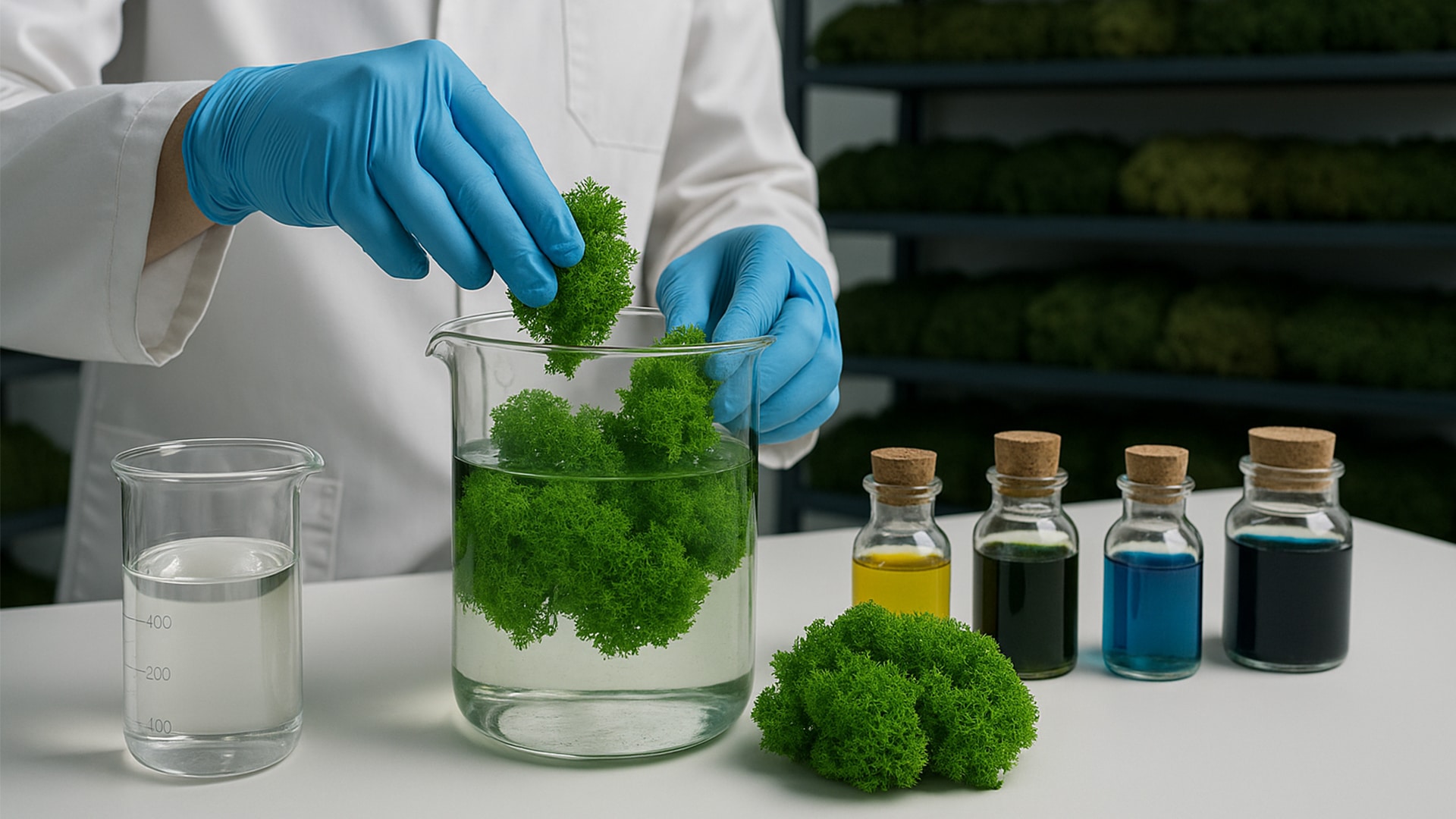
The plant stabilization process is an innovative method of preserving plant material. It involves replacing the plant's natural sap with a special preservative mixture. This technique preserves the natural appearance, elasticity, and color of plants for many years, eliminating the need for watering and care. However, in the context of growing environmental awareness, a fundamental question arises: is plant stabilization an environmentally friendly solution?
What is the plant stabilization process - the basics of technology
Plant stabilization is an advanced process that has revolutionized the way we incorporate natural elements into interiors in recent years. This method involves replacing water and plant juices with a specially formulated preservative mixture based on glycerin and natural dyes.
In practice, this process begins with careful selection of plants at their optimal growth stage. Our experience shows that only fully mature plants, free from damage and disease, can undergo the stabilization process with the best final results.
The selected specimens are then subjected to a process that lasts from several days to several weeks, depending on the species and size of the plant. During this time, the natural juices and water in the plant tissues are gradually displaced by the preservative.
Importantly, stabilization is not the same as drying. Dried plants become brittle and lose their natural elasticity, while stabilized specimens retain their soft structure, elasticity, and vibrant colors for many years.
It's worth emphasizing that, unlike artificial imitations, stabilized plants are real plants that retain their natural appearance and texture. The stabilization process freezes them in time, at the peak of their natural beauty.
Ecological aspect of stabilization – environmental impact analysis
When assessing the environmental friendliness of the plant stabilization process, several key aspects should be taken into account: the sourcing of raw materials, the production process itself and the long-term impact of the final product on the environment.
Stabilized plants, such as reindeer moss or stabilized eucalyptus, are most often sourced from controlled cultivation, which is an important ecological factor. At Vikingmoss we only work with certified suppliers who adhere to the principles of sustainable agriculture and forestry.
From an ecological perspective, it is important to compare the carbon footprint of different types of plant decorations:
| Decoration type | Water consumption | CO₂ emissions (transport) | Durability | Utilization |
|---|---|---|---|---|
| Live plants | High | Regular (replacement) | 1-3 years | Composting |
| Artificial plants | Lack | Disposable | 5-10 years | Plastic waste |
| Stabilized plants | Lack | Disposable | 5-8 years | Partially biodegradable |
As our analyses show, stabilized plants offer a favorable compromise between durability and environmental impact. They do not require regular watering, which translates into significant water savings over the course of several years, especially in larger installations.
The stabilization process requires the use of specific chemicals, but modern technologies allow for the use of increasingly eco-friendly solutions. Our company systematically introduces innovations aimed at minimizing environmental impact, including biodegradable preservatives.
It should also be emphasized that stabilized plants eliminate the need to use pesticides and artificial fertilizers, which are an integral part of the care of many living potted plants, especially in difficult office or commercial conditions.
Comparison of stabilized and living plants – ecological balance
When analyzing the ecological aspect of stabilized plants, it is worth comparing them directly with traditional living plants, especially in the context of commercial and public applications.
Living potted plants require regular watering, fertilization, adequate sunlight, and pest control. In practice, this means significant water consumption, electricity (for lighting), pesticides, and ongoing maintenance.
Our many years of experience in implementing projects for hotels, restaurants, and offices show that maintaining live plants in good condition in many commercial spaces is extremely difficult. Inadequate lighting, air conditioning, heating, and lack of regular maintenance cause plants to quickly lose their aesthetic value and require replacement.
Replacing diseased or damaged plants generates additional environmental costs associated with transportation, the production of new plants, and the disposal of damaged ones. Stabilized plant compositions, such as those offered by Vikingmoss, eliminate this problem, ensuring a lasting decorative effect for many years.
The case of stabilized moss is particularly interesting. Natural lichens of the Cladonia genus grow very slowly in nature—around 1-3 mm per year. Harvesting them directly from forests would be highly unsustainable. Therefore, the production process uses specimens from controlled cultivation, often from regions where they occur naturally in large quantities.
Resource Efficiency – Water, Energy and Transport
One of the most important ecological aspects of stabilized plants is their zero water requirement after the production process. This is crucial at a time when access to drinking water is becoming a global challenge.
Research conducted by industry experts has shown that an average-sized living green wall with an area of 10 m² can use up to 500 liters of water per month. Over the course of a year, this translates to an impressive 6,000 liters. By comparison, a stabilized moss wall with the same area doesn't require a single drop of water throughout its entire lifespan.
Life Cycle Analysis (LCA) also shows clear differences in carbon emissions related to transportation and plant replacement:
CO₂ emissions over a 5-year life cycle (10 m² green wall): – Living plants: 250-400 kg CO₂ (taking into account regular replacement) – Stabilized plants: 50-80 kg CO₂ (one-time transport)
Vikingmoss stabilized products are also lighter than their live counterparts, which translates into lower fuel consumption during transportation. Furthermore, eliminating the need for irrigation systems, which are essential for living plant walls, reduces the amount of materials used, including plastic and metal.
In terms of energy, stabilized plants do not require special lighting or systems to maintain appropriate climate conditions. This is particularly important in commercial spaces, where supplemental lighting is often installed for live plants, thus increasing electricity consumption.
-

-
Dried pampas grass – 10 pieces
42zlotySelect options This product has multiple variants. You can select your options on the product page -




Durability and longevity as an ecological factor
A key environmental consideration is product durability. Any item that lasts longer contributes to reducing overall resource consumption and waste production.
Vikingmoss 's stabilised plants maintain their aesthetic appeal for 5 to 10 years, depending on the conditions and plant type. This is significantly longer than most live potted plants in demanding commercial spaces, which often require replacement every few months.
In practice, this means that a single stabilized composition can replace 10 to 20 replacements of living plants over the same period. This translates directly into lower resource consumption, reduced waste, and a lower carbon footprint associated with production and transportation.
It's also worth noting that stabilized plants don't require regular maintenance, eliminating the need for travel by plant care specialists. For large commercial facilities, this can significantly reduce CO₂ emissions associated with transportation.
Our company's proven compositions of moss and stabilized plants in office and hotel spaces confirm that their longevity is an important ecological factor, appreciated by both environmentally conscious customers and those looking for practical and economical solutions.
Innovations in plant stabilization – towards greater environmental friendliness
Plant stabilization technology is constantly evolving, and research into new, more eco-friendly methods is being conducted by leading manufacturers in the industry, including Vikingmoss.
The latest trends in plant stabilization include:
- Use of biodegradable preservatives that minimize environmental impact.
- Optimizing the production process to reduce energy consumption.
- Using natural dyes instead of synthetic ones.
- Recycling of water used in the production process.
Laboratory studies show that modern stabilization methods can reduce the carbon footprint of the process by up to 30% compared to traditional techniques. At Vikingmoss we systematically implement these innovations, striving for increasingly eco-friendly production.
It's also worth mentioning the possibility of recycling and biodegrading products at the end of their life cycle. Although stabilized plants are not fully biodegradable (due to preservatives), a significant portion of the plant material decomposes naturally, putting them in a better position than artificial plastic imitations.
Our customers increasingly ask about the ecological aspects of our products, which motivates us to continuously improve our processes and search for new, more environmentally friendly solutions.
Conclusions – is plant stabilization ecological?
To summarize our considerations, the answer to the question of the environmental friendliness of plant stabilization is not clear. As with most products, it must be considered in the context of the entire life cycle and specific alternatives.
Stabilized plants offer a number of ecological benefits:
- Zero water consumption after installation
- No need to use pesticides or fertilizers
- Long service life, eliminating the need for frequent replacement
- Smaller carbon footprint associated with transportation (compared to regularly replaced live plants)
- Can be installed in places where live plants cannot survive (eliminating waste of resources)
In commercial spaces, where maintaining live plants is often problematic, Vikingmoss stabilized plants offer a sensible compromise between aesthetics, practicality, and ecology. They eliminate wasteful plants that quickly die in harsh conditions, and significantly reduce water consumption.
Choose eco-friendly solutions with Vikingmoss
If you're looking to incorporate elements of nature into your interior in an ecologically responsible way, we invite you to explore Vikingmossofferings. Our stabilized plants combine durability with natural beauty, providing a sustainable alternative to both artificial decorations and difficult-to-maintain live plants.
Visit our website vikingmoss www.vikingmoss.com or contact our experts who will help you choose the solutions that best suit your needs and environmental values. Together, we can create beautiful, nature-inspired spaces while minimizing their environmental impact .

Hi, my name is Marian Sikora and I'm the founder of Sikorka and Vikingmoss a company that has been producing wooden world maps for walls and moss walls since 2018. My extensive experience and qualifications have led to my success. I began my career in the IT industry, where I spent many years creating websites, graphic design, programming, and implementing marketing campaigns. However, over time, I desired a change and decided to channel my passion for creation into something more tangible.


